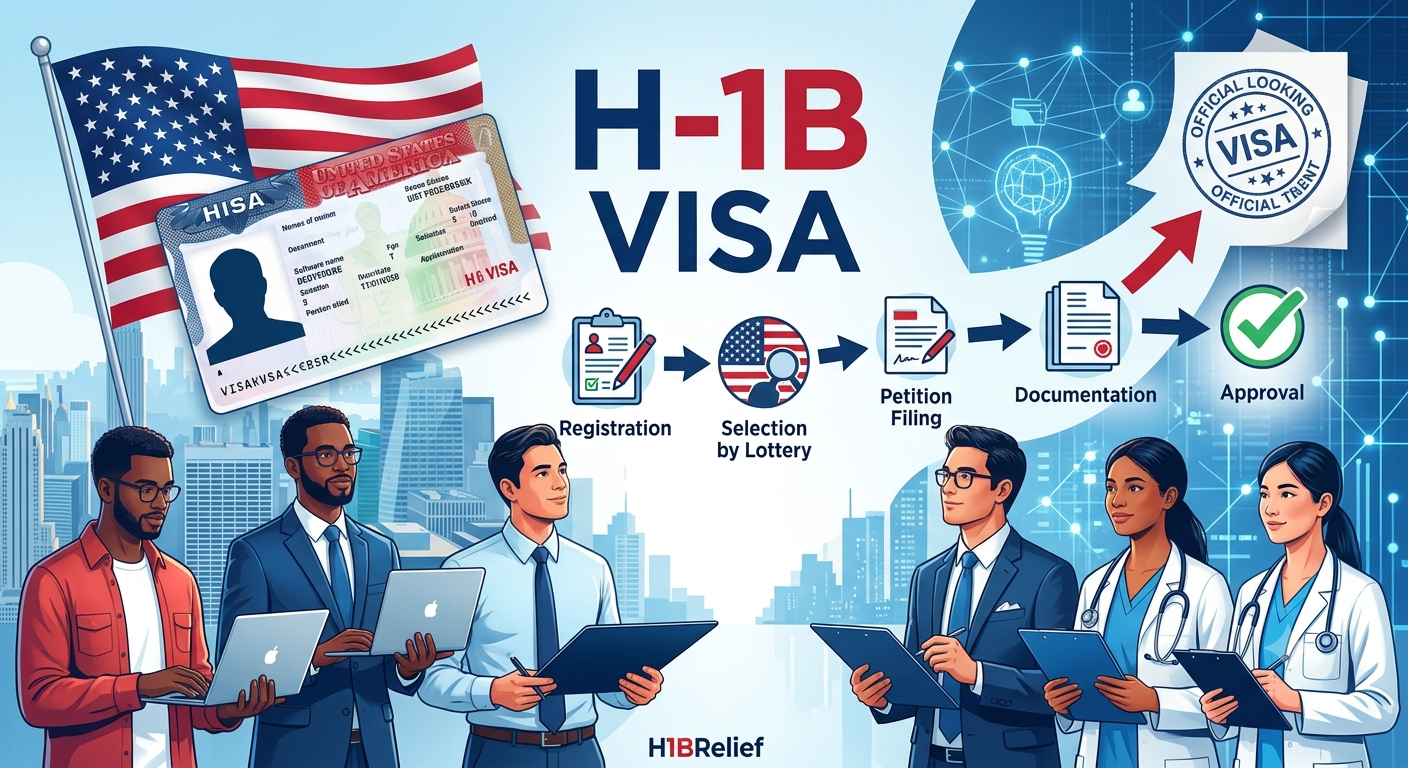
The H-1B visa remains one of the most important U.S. work visa options for skilled professionals working in fields such as technology, engineering, finance, healthcare, and other specialty occupations.
However, the H-1B process has become increasingly detailed. From electronic registration and beneficiary selection to petition filing and supporting documentation, applicants and employers need to understand each stage carefully.
For anyone planning an H-1B visa application in 2026, early preparation can make a significant difference.
What Is the H-1B Visa?
The H-1B visa allows U.S. employers to hire foreign professionals for specialty occupations that generally require specialized knowledge and a bachelor’s degree or equivalent in a related field.
Common H-1B occupations include:
- Software developers
- IT professionals
- Data scientists
- Engineers
- Financial analysts
- Healthcare professionals
- Business analysts
- Architects
- Researchers
- Other specialized professionals
The process generally involves a U.S. employer sponsoring the foreign worker and filing the required documentation with U.S. immigration authorities.
How Does the H-1B Process Work?
The H-1B process can be divided into several major stages.
1. Find a Qualifying U.S. Employer
The first step is finding a U.S. employer willing to sponsor you for an H-1B position.
The employer must have a legitimate position that qualifies as a specialty occupation and must meet the requirements for filing an H-1B petition.
2. H-1B Electronic Registration
For cap-subject H-1B cases, employers generally need to submit an electronic registration during the designated registration period.
USCIS uses the registration system before allowing selected beneficiaries to proceed with the H-1B petition process. USCIS has also implemented a beneficiary-centric selection system designed to reduce multiple registrations for the same individual.
This makes accurate registration information especially important.
3. Selection by USCIS
If the number of eligible registrations exceeds the available H-1B numbers, USCIS conducts a selection process.
Being selected does not mean the H-1B visa has already been approved.
Instead, selection generally gives the prospective employer an opportunity to file the full H-1B petition.
4. H-1B Petition Filing
After selection, the employer can proceed with the required H-1B petition.
The petition normally includes documentation demonstrating that:
- The employer has a legitimate position.
- The position qualifies as a specialty occupation.
- The beneficiary meets the requirements for the position.
- The offered employment is consistent with H-1B requirements.
- Required supporting documentation and fees have been provided.
A strong petition should present the facts clearly and consistently.
Why Documentation Matters
One of the biggest challenges in an H-1B case is demonstrating that the offered position and the beneficiary meet the applicable requirements.
Employers and applicants may need documentation relating to:
- Educational qualifications
- Degree transcripts
- Employment history
- Job responsibilities
- Employer information
- Salary and employment terms
- Work location
- Company operations
- Contracts or project information, when applicable
- Other evidence supporting the petition
USCIS evaluates the evidence submitted with the petition, so incomplete or inconsistent documentation can create unnecessary complications.
H-1B Registration Is Not H-1B Approval
This is an important distinction for applicants.
An H-1B registration and an approved H-1B petition are not the same thing.
The registration process is an initial step for cap-subject cases. If a registration is selected, the employer still needs to complete the petition process.
USCIS reports that the H-1B program has historically received significantly more registrations than the annual numerical allocations, making selection an important part of the process.
Therefore, applicants should not assume that registration selection automatically guarantees H-1B status.
What Happens After H-1B Petition Approval?
Once USCIS approves the petition, the next steps depend on the applicant’s individual circumstances.
For example, the process can differ for someone who is:
- Already legally present in the United States
- Changing status to H-1B
- Currently working in another nonimmigrant status
- Applying for an H-1B visa at a U.S. consulate outside the United States
Applicants should understand which process applies to their situation before making travel or employment decisions.
Common H-1B Mistakes to Avoid
Mistake 1: Waiting Until the Last Minute
H-1B preparation can require significant documentation. Waiting until the registration or filing period can create unnecessary pressure.
Mistake 2: Providing Inconsistent Information
Information across the registration, petition, resume, educational documents, and employment records should be accurate and consistent.
Mistake 3: Assuming Selection Means Approval
Selection only allows the petition process to move forward. It is not the same as an approved H-1B petition.
Mistake 4: Ignoring Job Requirements
The offered position needs to meet the applicable specialty occupation requirements, and the beneficiary needs to be appropriately qualified.
Mistake 5: Relying on Unverified Immigration Information
H-1B rules and procedures can change. Applicants should rely on current official information and qualified immigration professionals rather than outdated social media posts or online rumors.
How Can Applicants Prepare for H-1B 2026?
A practical preparation checklist can include:
Step 1: Identify potential H-1B sponsoring employers.
Step 2: Review your education and professional qualifications.
Step 3: Collect important employment and education documents.
Step 4: Discuss the proposed position with the sponsoring employer.
Step 5: Prepare accurate information for the electronic registration.
Step 6: If selected, work with the employer and immigration counsel to prepare the petition.
Step 7: Monitor USCIS notices and deadlines carefully.
Why Professional H-1B Guidance Can Help
The H-1B process involves multiple stages, deadlines, forms, and documentation requirements.
A small mistake in information or documentation can create avoidable problems. Professional guidance can help applicants and employers understand the process, identify documentation requirements, and prepare for the next stage.
At H1BRelief, our goal is to make the H-1B journey easier to understand by providing practical information and guidance for professionals and employers navigating the U.S. immigration process.
Final Thoughts
The H-1B visa continues to be an important pathway for skilled professionals seeking employment opportunities in the United States.
However, successful preparation requires more than simply entering the H-1B registration process.
Understanding eligibility, preparing documentation, working with a sponsoring employer, following USCIS requirements, and staying informed about current rules can help applicants approach the process more confidently.
If you are planning an H-1B application, start preparing early rather than waiting for the registration period to begin.
Important: Immigration rules and procedures can change. This article is for general informational purposes and should not be considered legal advice. Applicants should consult a qualified U.S. immigration attorney or accredited professional for advice about their specific circumstances.
Comments