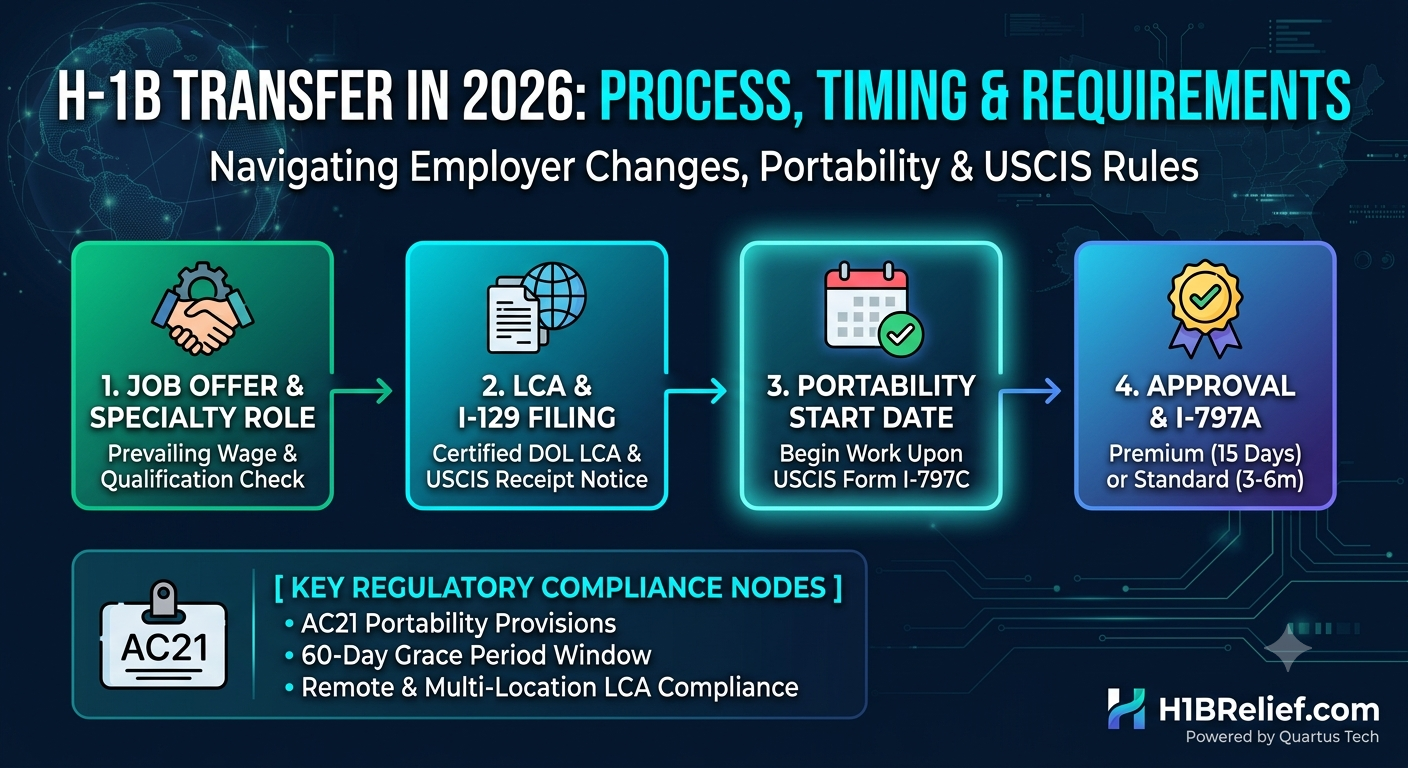
Changing jobs while working in the United States on an H-1B visa can raise an important question: Can an H-1B worker move to a new employer without starting the entire process from the beginning?
In many situations, an H-1B worker can change employers through a new H-1B petition filed by the prospective employer. This is commonly called an H-1B transfer.
However, an H-1B transfer is not simply an administrative change. The new employer must meet applicable requirements, and the petition needs to accurately document the position, employee qualifications, work location, and other relevant details.
This guide explains the H-1B transfer process, important requirements, timing considerations, and common mistakes to avoid in 2026.
What Is an H-1B Transfer?
An H-1B transfer generally refers to the process through which an H-1B worker moves from their current sponsoring employer to another employer.
Technically, the new employer files a new H-1B petition rather than literally “transferring” the existing petition.
For an eligible H-1B worker, this can provide a pathway to change employers while maintaining H-1B status.
The process can involve:
New Employer → H-1B Petition → USCIS Review → Employment Change
The exact requirements depend on the worker’s immigration history and individual circumstances.
Who Can Apply for an H-1B Transfer?
An H-1B worker may potentially change employers if the applicable requirements are satisfied.
Factors that may be relevant include:
- Maintaining valid H-1B status
- Having an eligible new employer
- The new position qualifying as a specialty occupation
- Meeting the educational or experience requirements for the position
- Appropriate wage and employment information
- Proper petition documentation
A worker’s individual circumstances can affect the appropriate filing strategy, so eligibility should be reviewed carefully.
How Does the H-1B Transfer Process Work?
Step 1: Find a New Employer
The first step is securing a qualifying job with a new U.S. employer willing to sponsor the H-1B petition.
The position should be evaluated for specialty occupation requirements.
Step 2: Employer Reviews the Position
The employer and immigration professionals generally review factors such as:
- Job title
- Job duties
- Required education
- Required skills
- Salary
- Work location
- Employer information
The job description should accurately reflect the actual position.
Step 3: Prepare the Required Documentation
The employee may need to provide documents such as:
- Passport
- Current immigration documents
- H-1B approval notice
- I-94 information
- Resume
- Degree certificates
- Academic transcripts
- Previous immigration documentation
- Employment information
The exact documentation can vary depending on the case.
Step 4: File the H-1B Petition
The new employer submits the appropriate petition to USCIS with supporting documentation and applicable filing fees.
USCIS then reviews the petition.
Step 5: Begin Employment When Permitted
Certain eligible H-1B workers may be able to begin working for the new employer under the H-1B portability provisions once the applicable requirements are met.
Because employment timing can be case-specific, workers should confirm their situation with qualified immigration counsel before changing jobs.
Is an H-1B Transfer the Same as a New H-1B Lottery?
Generally, an H-1B worker who is already counted against the applicable H-1B cap does not simply go through another annual lottery every time they change employers.
However, the petition still needs to satisfy applicable H-1B requirements.
This distinction is important for professionals considering a job change.
H-1B registration/selection and H-1B employer change petitions are different processes.
How Long Does an H-1B Transfer Take?
Processing time can vary depending on the case and USCIS processing options.
Factors can include:
- USCIS workload
- Petition type
- Filing location
- Whether additional evidence is requested
- Whether premium processing is used
- Complexity of the case
Because processing times can change, applicants should check current USCIS information rather than relying on an old timeline found online.
Can You Change Jobs Before H-1B Transfer Approval?
In certain circumstances, H-1B portability rules can allow an eligible H-1B worker to begin employment with a new employer after the new employer properly files the required petition, rather than waiting for final approval.
However, the portability rules have specific requirements and limitations.
Workers should not assume that simply submitting paperwork automatically makes a job change permissible.
Before leaving the current employer or starting with the new employer, it is important to confirm the applicable rules for the individual case.
What Happens if the H-1B Transfer Is Denied?
An H-1B transfer petition is subject to USCIS review and can be denied.
A denial can potentially affect the worker’s ability to remain employed by the new employer and may raise additional immigration considerations depending on the circumstances.
This is why petition preparation should focus on:
- Accurate job information
- Strong supporting documentation
- Specialty occupation requirements
- Employee qualifications
- Employer information
- Consistency across submitted documents
Professional legal guidance can be especially important when a case involves complications or prior immigration issues.
H-1B Transfer and Work Location
Work location can be an important part of an H-1B petition.
For example, a change involving:
- A new city
- A different metropolitan area
- Remote work
- Hybrid work
- Client-site employment
may require additional consideration.
Employers should make sure that the petition and related employment documentation accurately reflect the worker’s actual circumstances.
Common H-1B Transfer Mistakes
1. Resigning Too Early
Some workers resign from their current position before understanding the timing and requirements of the new petition.
Planning the transition carefully can reduce unnecessary immigration and employment risk.
2. Using an Inaccurate Job Description
The position described in the petition should correspond to the actual job.
3. Ignoring Work Location
Remote and hybrid arrangements can create additional considerations.
4. Providing Inconsistent Information
Information in the resume, petition, employment documents, educational records, and other materials should be accurate and consistent.
5. Relying on Old Information
Immigration rules and USCIS procedures can change.
A blog post or social media comment from several years ago may not reflect current requirements.
H-1B Transfer for Technology Professionals
H-1B transfers are particularly relevant to professionals working in technology and specialized fields.
Examples include:
- Software engineers
- Data scientists
- AI and machine learning professionals
- Cloud engineers
- Cybersecurity specialists
- Database engineers
- Mobile application developers
- IT consultants
- Systems analysts
The job title itself does not determine H-1B eligibility. The actual position and applicable requirements are important considerations.
How Employers Can Make the Process Easier
Employers planning to hire an H-1B professional should begin immigration coordination early.
A structured process can include:
- Reviewing the proposed position
- Confirming sponsorship requirements
- Collecting employee documents
- Reviewing work location
- Coordinating with immigration counsel
- Preparing the petition
- Tracking filing and employment timelines
- Maintaining appropriate records
Good preparation can help avoid preventable delays and documentation problems.
H-1B Transfer vs. Green Card Planning
An H-1B transfer addresses an employer change, while employment-based permanent residence is a separate immigration process.
An H-1B worker considering long-term U.S. employment may therefore want to consider both immediate employment needs and longer-term immigration goals.
Depending on the individual’s circumstances, this may involve discussing options such as employment-based permanent residence with a qualified immigration professional.
Final Thoughts
An H-1B transfer can provide an important pathway for eligible H-1B professionals who want to change employers in the United States.
However, the process involves more than simply moving from one company to another.
The new position, employer, work location, employee qualifications, documentation, and applicable immigration rules all need to be considered.
For H-1B workers planning a job change in 2026, early preparation and accurate information are essential.
H1BRelief provides educational resources to help H-1B professionals and employers better understand U.S. immigration processes. For advice about a specific immigration case, consult a qualified U.S. immigration attorney or accredited legal professional.
Frequently Asked Questions
Can an H-1B worker change employers?
Yes, eligible H-1B workers can generally change employers through the appropriate H-1B petition process.
Does an H-1B transfer require another lottery?
Generally, an H-1B worker already counted against the applicable cap does not need to enter the annual cap lottery again simply because they change employers.
Can I start working before the transfer is approved?
Eligible H-1B workers may potentially use H-1B portability provisions, but specific requirements apply. Confirm the timing with qualified immigration counsel.
How long does an H-1B transfer take?
Processing time varies. USCIS processing times and available expedited options should be checked for the current case.
Can I transfer my H-1B to a different city?
A change in work location can create additional immigration considerations. The employer should review the location requirements before the move.
Can I transfer my H-1B while working remotely?
Remote or hybrid employment can involve work-location considerations. The employer should ensure the petition and employment arrangements comply with applicable requirements.
Comments