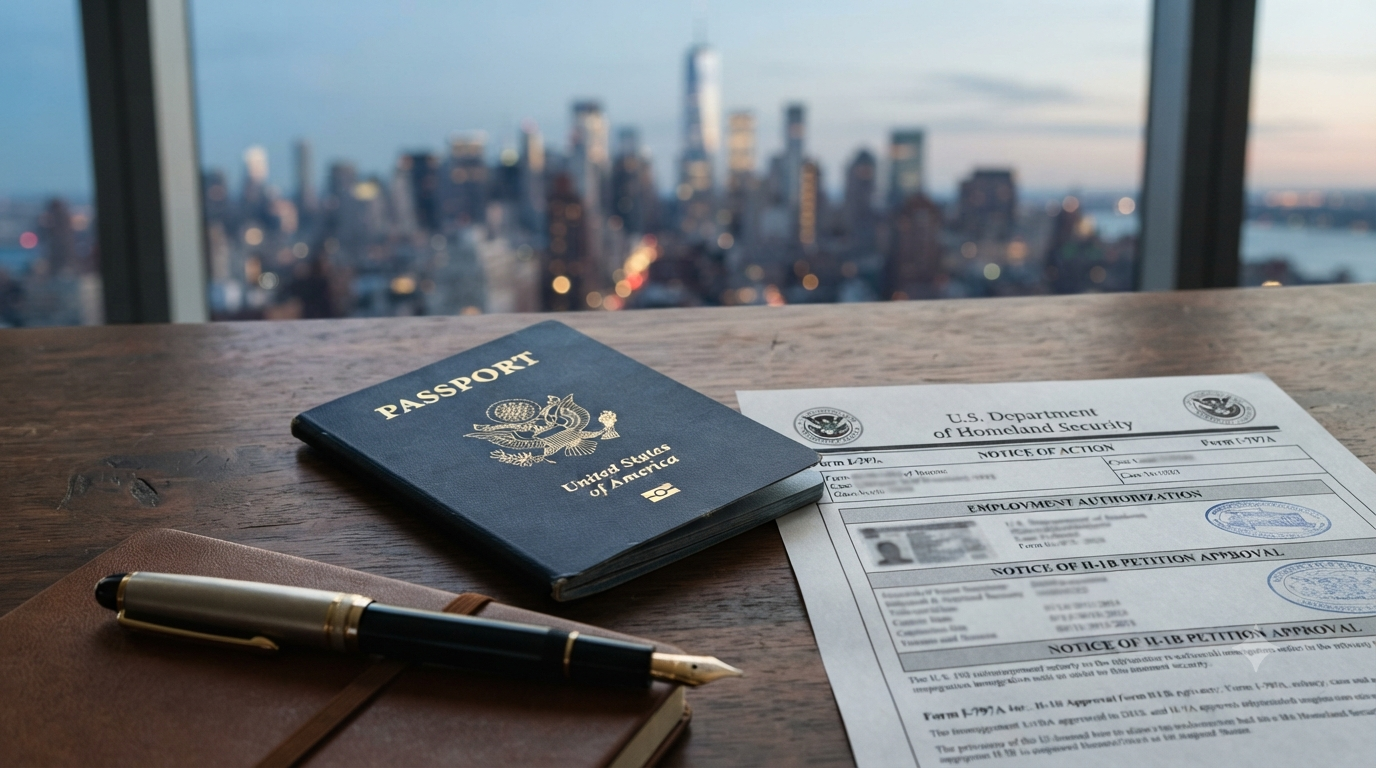
The H-1B visa program continues to play an important role in connecting skilled international professionals with employment opportunities in the United States. From software engineers and IT specialists to healthcare professionals, researchers, and financial experts, thousands of foreign workers rely on this employment-based visa category to pursue their professional goals in America.
However, 2026 has brought important developments to the H-1B immigration landscape. Changes to the selection process, employer responsibilities, filing procedures, and immigration policies mean that applicants and sponsoring companies need to pay closer attention to the latest requirements.
For anyone planning to pursue an H-1B visa or sponsor an international employee, understanding these developments is essential.
In this guide, we explore the major H-1B visa changes in 2026, the FY 2027 registration process, eligibility requirements, employer responsibilities, and practical steps applicants should consider.
1. Understanding the H-1B Visa Program
The H-1B visa is a temporary U.S. employment visa that allows qualifying employers to hire foreign professionals for specialty occupation positions.
A specialty occupation generally requires the theoretical and practical application of specialized knowledge and at least a bachelor’s degree in a directly related specific specialty, or its equivalent, as required by the applicable regulations.
Some common professional fields include:
- Information Technology and Software Development
- Engineering and Technical Services
- Healthcare and Medical Professions
- Financial and Accounting Services
- Scientific Research
- Architecture and Specialized Business Roles
The annual regular H-1B cap is 65,000 visas, with an additional 20,000 places available under the U.S. advanced degree exemption for qualifying individuals with a master’s degree or higher from an eligible U.S. institution.
2. Major H-1B Visa Changes in 2026
One of the most important developments in 2026 is the introduction of a weighted selection process for cap-subject H-1B registrations.
Let’s explore the major developments.
A. New Weighted H-1B Selection Process
Previously, when the number of eligible registrations exceeded the annual cap, USCIS generally used a random selection process.
For the FY 2027 cap season, a weighted selection system was introduced. The system generally provides greater selection weight to registrations associated with higher wage levels.
The new approach is designed to favor higher-skilled and higher-paid positions while retaining opportunities for employers hiring workers at different wage levels.
This means employers should pay particular attention to the offered wage, occupation, location, and applicable prevailing wage level when preparing registrations.
B. FY 2027 H-1B Registration Process
USCIS opened the FY 2027 initial registration period from March 4 through March 19, 2026.
The registration fee was $215 per beneficiary.
USCIS subsequently announced on March 31, 2026, that it had completed the initial selection process and notified employers with selected beneficiaries.
Applicants and employers should understand that registration selection only provides eligibility to file a cap-subject petition. It does not guarantee final H-1B approval.
C. Additional $100,000 Payment Requirement for Certain Petitions
Another significant development involves the September 2025 presidential proclamation introducing an additional $100,000 payment requirement for certain H-1B petitions.
The requirement applies to covered petitions under the proclamation, subject to its conditions and exceptions. It is not a universal fee applicable to every H-1B applicant or petition.
Employers should carefully review the applicable rules before filing, particularly when sponsoring workers who are outside the United States.
D. Updated Form I-129 Requirements
USCIS introduced a new edition of Form I-129 dated February 27, 2026.
Beginning April 1, 2026, USCIS required the updated edition for relevant H-1B cap-subject filings.
Employers should always verify the latest form edition and filing instructions before submitting an immigration petition.
3. Who Is Eligible for an H-1B Visa?
Not every job position qualifies for H-1B sponsorship. Applicants and employers must satisfy specific eligibility requirements.
Some important considerations include:
Educational Qualifications
The applicant generally needs a bachelor’s degree or higher in a directly related specific specialty, or an equivalent qualification under applicable rules.
Specialty Occupation Position
The offered position must qualify as a specialty occupation under the applicable H-1B regulations.
Employer Sponsorship
A qualifying U.S. employer must file the required petition on behalf of the prospective employee.
Labor Condition Application
The employer generally needs an approved Labor Condition Application (LCA) from the U.S. Department of Labor before filing the H-1B petition.
Employer and Job Documentation
The employer must provide appropriate supporting evidence regarding the position, offered wage, work location, and the beneficiary’s qualifications.
Meeting these requirements is important for establishing eligibility.
4. Important Documents Required for an H-1B Petition
Preparing accurate documentation can help reduce avoidable filing issues.
Depending on the applicant’s circumstances and petition type, the following documents may be required:
Employee Documents
- Valid passport and travel history.
- Educational certificates and academic transcripts.
- Updated professional resume.
- Previous employment verification letters.
- Relevant professional certifications.
- Current immigration status documents, if applicable.
- Prior H-1B approval notices, if applicable.
Employer Documents
- Company registration and business information.
- Job offer and employment agreement.
- Detailed job description.
- Offered salary and work location details.
- Labor Condition Application documentation.
- Supporting evidence demonstrating the specialty occupation requirements.
The exact documentation varies depending on whether the petition involves an initial H-1B application, an extension, a transfer, or a change of status.
5. Common H-1B Visa Challenges Applicants Face
The H-1B process can involve several challenges for both employees and employers.
Understanding the New Selection Rules
Changes to the selection system can make registration planning more complicated. Employers need to understand how wage levels and other registration details affect the process.
Finding an H-1B Sponsoring Employer
Many qualified professionals struggle to identify employers willing and able to sponsor an H-1B petition.
Researching companies, understanding job requirements, and preparing a strong professional profile can improve the job-search process.
Documentation Errors
Incomplete or inconsistent documents can create delays, requests for evidence, or other complications.
Specialty Occupation Eligibility
A job title alone does not establish eligibility. The employer must demonstrate that the actual position meets the applicable specialty occupation requirements.
Immigration Status Management
Applicants already in the United States must pay attention to their current immigration status, authorized employment, and filing deadlines.
Professional guidance can be useful when a case involves complicated immigration circumstances.
6. H-1B Visa Process: Step-by-Step Guide
Understanding the general process can help applicants and employers prepare more effectively.
Step 1: Find a Sponsoring Employer
The applicant identifies a U.S. employer willing to offer qualifying employment and sponsor the H-1B petition.
Step 2: Review Eligibility
The employer evaluates the position, educational qualifications, wage information, and applicable H-1B requirements.
Step 3: Complete Electronic Registration
For cap-subject cases, the employer or authorized representative submits the beneficiary’s electronic registration during the announced registration period.
Step 4: Wait for Selection
USCIS conducts the applicable selection process when registrations exceed the available numerical allocation.
Step 5: File the H-1B Petition
If selected, the employer may submit Form I-129 with the required supporting documentation within the designated filing period.
Step 6: USCIS Reviews the Petition
USCIS reviews the petition and may approve it, deny it, or issue a Request for Evidence (RFE).
Step 7: Visa Processing or Change of Status
Depending on the applicant’s location and
Comments