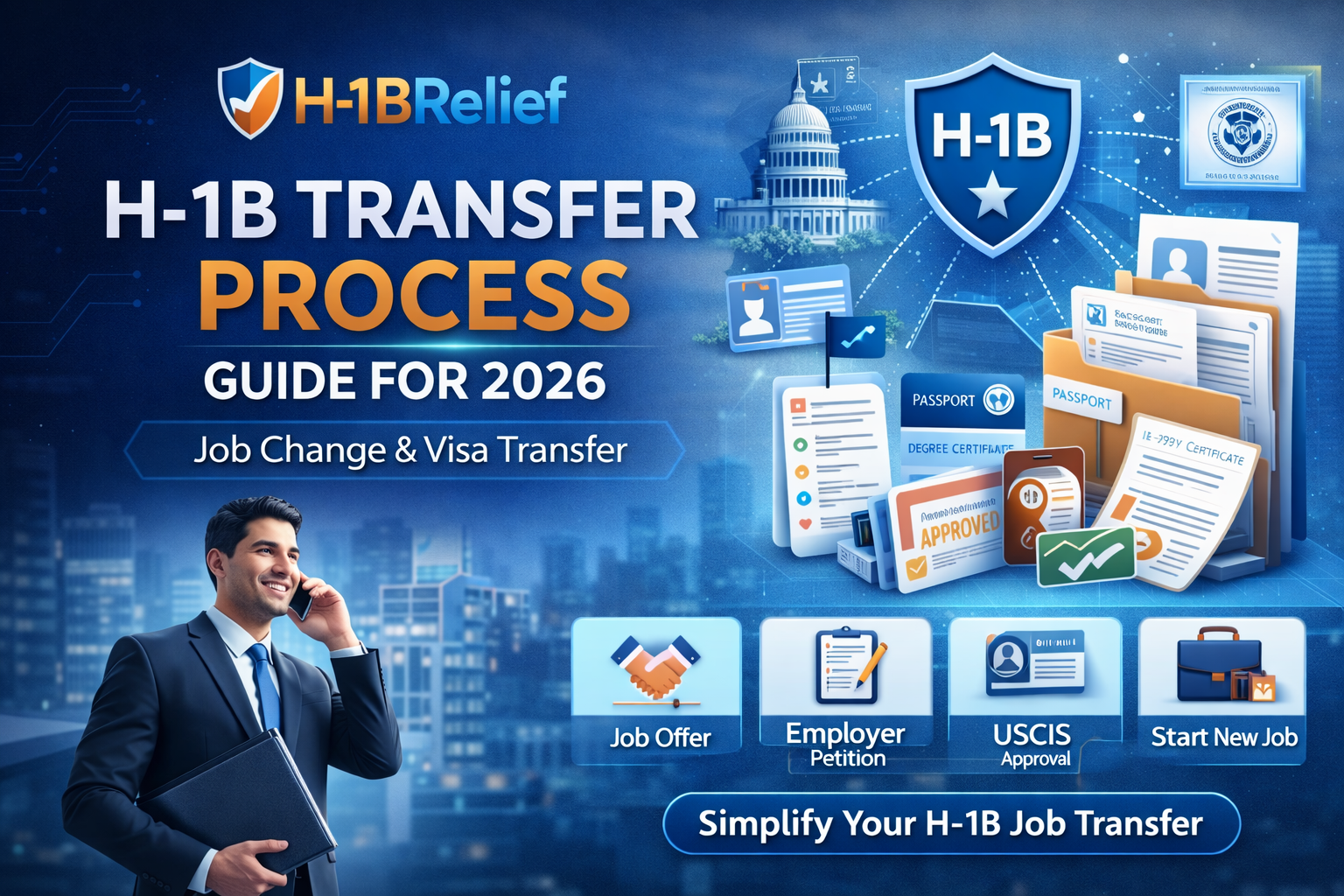
Changing jobs while on an H-1B visa can feel complicated, but the process is easier than many people think. Thousands of professionals in the United States switch employers every year through the H-1B transfer process.
Platforms like H1BRelief help skilled workers understand the process, find new opportunities, and manage their visa transitions smoothly.
In this guide, we’ll explain everything you need to know about H-1B transfers in 2026.
What Is an H-1B Transfer?
An H-1B transfer allows a foreign worker to move from one employer to another while maintaining their H-1B visa status.
Unlike the original H-1B lottery process, a transfer does not require a new lottery. Instead, the new employer files a new petition with the United States Citizenship and Immigration Services (USCIS).
Once the petition is filed and received by USCIS, the employee can typically begin working for the new employer.
When Can You Apply for an H-1B Transfer?
You may apply for a transfer if:
- You currently hold a valid H-1B visa
- A new employer offers you a job
- Your visa status is still active
- The new employer files the required petition
Many professionals change jobs to get better salary, career growth, or improved work conditions.
Step-by-Step H-1B Transfer Process
1. Receive a Job Offer
First, you must receive an official job offer from a new employer willing to sponsor your H-1B visa.
2. Labor Condition Application (LCA)
The employer submits a Labor Condition Application to the U.S. Department of Labor, confirming that wages and work conditions meet legal requirements.
3. Filing the H-1B Petition
After LCA approval, the employer files Form I-129 with United States Citizenship and Immigration Services.
4. Start Working
Once USCIS receives the petition, you may start working for the new employer under H-1B portability rules.
Documents Required for H-1B Transfer
Common documents include:
- Copy of passport
- Current H-1B approval notice (I-797)
- Recent pay stubs
- Educational certificates
- Resume
- Previous visa documents
Having these documents ready helps speed up the process.
Processing Time for H-1B Transfer
Processing times depend on the service type:
Regular Processing:
2–6 months
Premium Processing:
About 15 calendar days
Premium processing is often used when employees need faster approval.
Common Reasons for H-1B Transfer
Many professionals change employers for:
- Higher salary opportunities
- Better career growth
- More stable companies
- Improved work environment
- New technology roles
The tech industry especially sees frequent H-1B transfers due to high demand for skilled professionals.
How H1BRelief Helps Visa Holders
Navigating visa rules can be confusing for many professionals. H1BRelief provides resources and guidance to help H-1B workers understand their options and move forward confidently.
The platform helps users:
- Understand visa transfer rules
- Find new job opportunities
- Stay updated on immigration policies
- Navigate complex visa processes
Comments